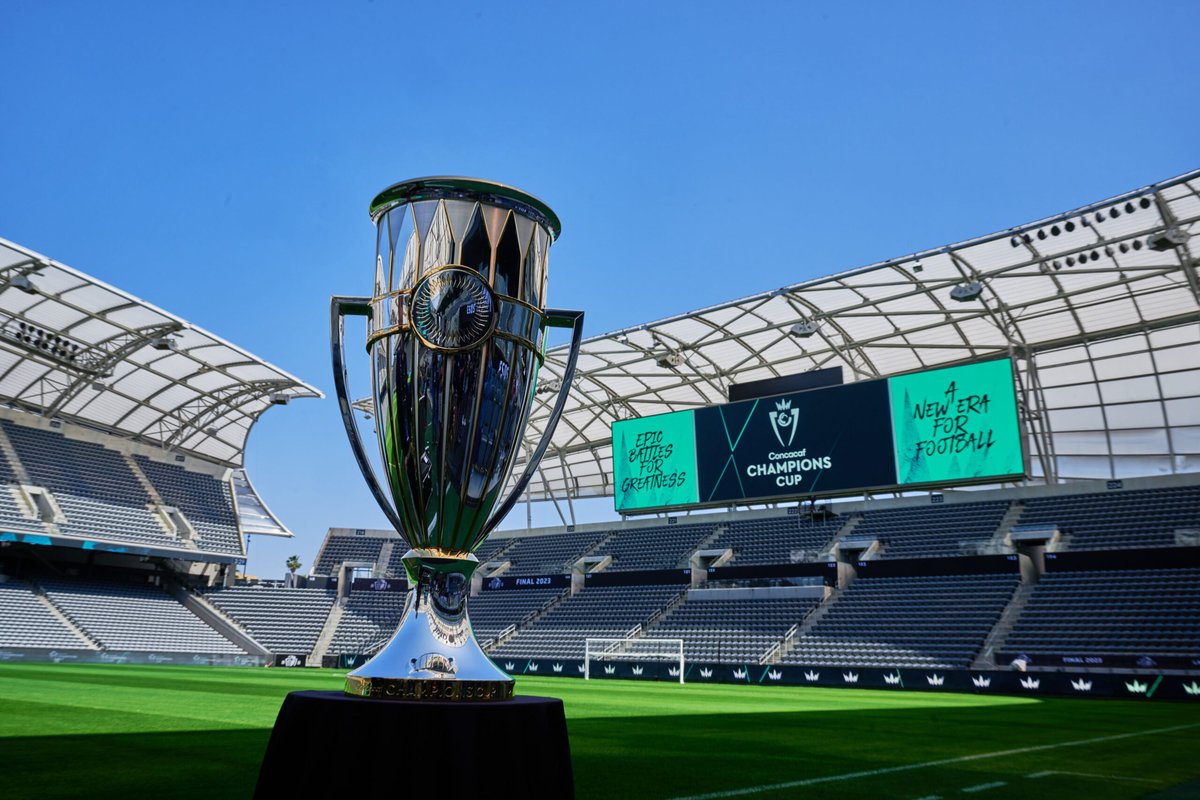
North American club soccer has always had its own unique rhythm, but in recent years, a new beat has emerged, dramatically reshaping the Relevant Tournament Context (e.g., Leagues Cup, Concacaf CCL) for teams from Major League Soccer (MLS) and Liga MX. This evolution isn't just about adding another competition to an already packed calendar; it's about forging deeper inter-league rivalries and creating a crucial pathway to continental glory. At the heart of this shift lies the Leagues Cup, a tournament that has rapidly grown from a niche showcase into a pivotal event, directly determining qualification for the prestigious Concacaf Champions Cup.
Understanding the Leagues Cup isn't just for die-hard fans; it's essential for anyone tracking the ambitions of clubs across the U.S., Canada, and Mexico. This guide will walk you through its history, its game-changing format, and its undeniable impact on the future of soccer in the region.
At a Glance: Key Takeaways on the Leagues Cup and Concacaf Champions Cup Connection
- The Leagues Cup is an annual tournament featuring clubs from MLS (U.S./Canada) and Liga MX (Mexico).
- It has evolved significantly since its 2019 debut, expanding to include all teams from both leagues in 2023.
- Since 2023, the top three Leagues Cup finishers earn berths in the Concacaf Champions Cup, North America's premier club competition.
- The Leagues Cup champion receives a direct bye to the Concacaf Champions Cup Round of 16.
- The format is adjusting again in 2025, with fewer MLS teams participating (18 qualified teams) alongside all 18 Liga MX clubs.
- The 2025 edition will take place during the regular league seasons for both MLS and Liga MX, rather than pausing them.
- Despite early criticism, the tournament has gained prominence, especially with high-profile moments like Inter Miami CF's 2023 triumph.
What is the Leagues Cup? More Than Just a Friendly
Imagine a tournament where the best clubs from two rival leagues – Major League Soccer and Liga MX – clash head-on, not in friendly exhibitions, but in high-stakes matches that genuinely matter. That's the Leagues Cup. Hosted across the United States and Canada, this annual competition brings together the distinct styles and passionate fan bases of North American soccer, creating a unique spectacle. It's a regional cup for Concacaf, offering a definitive measure of supremacy between two of the continent's most significant leagues.
The Evolution of a Tournament: From Showcase to Staple
The Leagues Cup wasn't born overnight as a behemoth. Its journey reflects a strategic, albeit sometimes controversial, push to deepen inter-league competition and elevate the region's club football.
Humble Beginnings: The 2019 Inaugural Edition
The first Leagues Cup kicked off in July 2019, a modest affair featuring eight teams – four from MLS and four from Liga MX. It was a single-elimination bracket, culminating in a final held in Whitney, Nevada. Cruz Azul etched their name into history as the inaugural champions, setting the stage for what was to come. At this point, many viewed it as an extended friendly series, a "cash-grab" designed more for spectacle than sporting significance.
Setbacks and Showcases: The Early 2020s
The momentum was intended to build in 2020 with a planned 16-team tournament. However, the global COVID-19 pandemic forced its cancellation, putting a temporary halt to the expansion plans. In 2021, the tournament returned to its 8-team format, with Club León emerging victorious over Seattle Sounders FC.
The 2022 edition saw another shift. Due to the fixture congestion caused by the 2022 FIFA World Cup, a formal tournament wasn't held. Instead, a "Leagues Cup Showcase" offered a series of exhibition matches, keeping the inter-league concept alive without the competitive stakes. This period highlights the early struggles and adaptations required to integrate such a significant competition into already busy schedules.
The Grand Expansion: All Clubs Go All-In (2023-2024)
The Leagues Cup took its most significant leap in 2023, transforming into a massive, month-long event that included all clubs from both MLS and Liga MX. This meant 47 teams competing in 77 matches, effectively pausing both league seasons for the duration. The scale was unprecedented, marking the tournament as a true regional cup within Concacaf.
The 2023 edition became globally prominent when Lionel Messi joined Inter Miami CF and led them to an emotional victory, captivating audiences worldwide. His presence not only elevated the tournament's profile but also underscored its potential for drama and star power. Columbus Crew continued the expanded format's legacy by winning the 2024 edition, further solidifying the tournament's place in the annual calendar.
The Next Evolution: Contraction and Refinement (2025 Onward)
Change is constant, and the Leagues Cup is no exception. For 2025, the tournament is slated for another significant structural adjustment. It will include 18 qualified MLS clubs and all 18 Liga MX clubs, totaling 36 participants. This move aligns with new MLS guidelines aimed at limiting teams to two cup competitions per season, a response to concerns about player workload and schedule congestion. San Diego FC will replace Vancouver Whitecaps FC among MLS participants, reflecting the new qualification criteria. This contraction suggests a more streamlined, but still highly competitive, future for the tournament.
Why it Matters: The Concacaf Champions Cup Pathway
Beyond the rivalry and the trophy, the most compelling reason the Leagues Cup has become a must-watch event is its direct connection to the Concacaf Champions Cup (CCC). This isn't just a friendly; it's a direct gateway to the pinnacle of North American club soccer and ultimately, the FIFA Club World Cup.
Since the 2023 expanded format, the Leagues Cup has served as a primary qualification route for the Concacaf Champions Cup. Here's how it breaks down:
- Leagues Cup Champion: The team that lifts the Leagues Cup trophy earns a coveted bye directly into the Concacaf Champions Cup Round of 16. This is a massive advantage, allowing them to bypass the initial Round One matches and giving them fewer fixtures on their path to continental glory.
- Runner-Up: The team that reaches the final but falls short earns a berth in the Concacaf Champions Cup Round One.
- Third-Place Finisher: The winner of the third-place match also secures a spot in the Concacaf Champions Cup Round One.
This structure makes every deep run in the Leagues Cup critically important, injecting genuine competitive urgency into every match, from the group stage through the knockout rounds. It transforms the tournament from a standalone competition into an integral component of the broader North American club soccer ecosystem, directly influencing which teams get a shot at regional supremacy.
Understanding the Format: How Teams Compete
The rules of engagement for the Leagues Cup have adapted over time, reflecting lessons learned and a continuous effort to optimize competition, player welfare, and fan experience.
The Expanded Era (2023-2024): All-In Competition
During its fully expanded phase, the Leagues Cup was a massive undertaking:
- Participants: All 47 MLS and Liga MX teams.
- Group Stage: The top 15 teams from each league (based on previous season standings) were seeded into 15 groups. Remaining teams were drawn by geographic proximity to minimize travel burdens. Each team played three group stage matches in a round-robin format.
- Advancement: The top two teams from each group progressed to the knockout stage.
- Byes to Knockout Stage: To reward consistent excellence, the reigning MLS Cup champion and the highest-ranked Liga MX champion received automatic byes directly into the knockout stage, skipping the group play entirely.
- Knockout Stage: This was a single-elimination bracket, leading to the eventual champion.
The Evolving Landscape (2025 Onward): A Refined Approach
The 2025 format introduces significant changes, aiming for a more structured and perhaps less disruptive competition:
- Participants: A more curated field. All 18 Liga MX clubs will still participate, but only 18 qualified MLS clubs will join them. These MLS clubs are the top nine teams from each Conference that participated in the previous MLS Cup Playoffs.
- Dates: The tournament is scheduled from July 29 to August 31, 2025. This includes Phase One (July 29 - August 7), Quarterfinals (August 19-20), Semifinals (August 26-27), and the Final and Third Place Match (August 31).
- Host Locations: Matches will be played in 21 stadiums across the United States and Canada. Notably, pre-determined neutral venues will be used for Liga MX seeded teams during the knockout stages, ensuring a level playing field.
- Structure: The 2025 format is meticulously designed to maximize inter-league matches. Each team will play three games against teams from the other league in Phase One, totaling 54 group-like matches. This ensures fans get the cross-league matchups they desire.
- Advancement: The top four clubs from each league (based on their performance in Phase One) will qualify for the Quarterfinals. This ensures representation from both leagues in the crucial knockout rounds.
- Knockout Round: This remains a direct elimination bracket. Quarterfinal pairings will be determined by an inverse order of ranking among respective league tables (e.g., MLS 1 vs. LIGA MX 4). This guarantees that Quarterfinal matches are always MLS vs. Liga MX, fueling the rivalry.
- Scheduling Shift: Unlike the 2023 and 2024 editions, the 2025 competition will not pause the regular MLS and Liga MX seasons. Instead, it will run concurrently, a significant operational change that requires careful fixture management by both leagues and clubs.
The Points System: Every Game Counts
Since its expansion in 2023, the Leagues Cup has employed a distinctive points system, especially for drawn matches, designed to encourage aggressive play and reward shootout winners:
- Win: 3 points are awarded for a victory in regular time.
- Draw (goes to penalties): If a match ends in a tie, it proceeds directly to a penalty shootout. The winner of the shootout receives 2 points, while the loser still earns 1 point.
- Loss: A loss in regular time yields 0 points.
This system ensures that even a draw can be a valuable outcome, and the shootout winner gains a crucial extra point, making every moment of every game significant for group stage progression.
Navigating the Nuances: Privileges, Prizes, and Player Impact
Beyond the core format, there are specific elements that influence strategy, experience, and the overall perception of the tournament.
Home Field Advantage? Understanding Venue Privileges
In the 2025 format, top-ranked clubs receive specific venue privileges, particularly important as the tournament progresses:
- Liga MX Champions & Top-Ranked Clubs: The reigning Liga MX champion and the next five top-ranked Mexican clubs will benefit from less travel and hosting privileges. For instance, Club América, as the Liga MX champion, will enjoy venue privileges through the Semifinals (unless they face the LA Galaxy, the MLS Cup champion). Cruz Azul, as a high-ranked LMX club, will have venue privileges through the Quarterfinals (again, excluding a potential match against LA Galaxy). This incentivizes strong domestic league performance.
- MLS Cup Champions: The MLS Cup champions, such as the LA Galaxy in the 2025 context, will have venue privileges throughout the knockout stage. This rewards the best team from the previous MLS season with a significant advantage, potentially reducing travel and ensuring home crowd support in crucial matches.
These privileges are designed to create additional stakes within domestic league seasons and reward clubs that consistently perform at a high level.
The Trophy: A Symbol of Continental Supremacy
At the end of every tournament, one team gets to hoist the Leagues Cup trophy. Unveiled in September 2019, it's a substantial piece of silverware: a 22-pound (10.0 kg) silver bowl perched atop a pedestal, standing 16.5 inches (42 cm) tall and 16.1 inches (41 cm) wide. It's not just a physical prize; it's a tangible symbol of inter-league dominance and a direct ticket to the Concacaf Champions Cup.
Speaking of triumph, the 2023 edition was a historic one. If you want to dive deeper into the specifics of that memorable campaign and how one team made history, you can find Full Inter Miami Tigres coverage of key matches and moments from that tournament.
Watching the Action: Where to Tune In
For a tournament designed to showcase inter-league talent, accessibility is key. Since its major expansion in 2023, the Leagues Cup has embraced a global broadcasting strategy:
- MLS Season Pass (Apple TV): All 77 matches (in the expanded format) are broadcast worldwide on MLS Season Pass. This comprehensive streaming service offers commentary in English and Spanish, with French options available for matches involving Canadian teams. This ensures global reach and multiple language options.
- Linear TV Partners: Select matches are also televised on traditional networks, expanding their reach beyond streaming platforms. In the U.S., you can find games on Fox Sports and TUDN. In Canada, TSN and RDS carry live broadcasts. This dual approach maximizes viewership and caters to different consumption habits.
This widespread availability underscores the tournament's ambition to be a marquee event on the global soccer calendar, bringing the drama of MLS vs. Liga MX to as many eyes as possible.
Impact Beyond the Pitch: Criticisms and Controversies
While the Leagues Cup has evolved into a significant tournament, its journey hasn't been without its detractors and challenges. Implementing such a large-scale competition inevitably leads to logistical and philosophical debates.
The Schedule Squeeze: Player Workload and League Conflicts
One of the most persistent criticisms revolves around schedule congestion. Adding a month-long tournament, especially one that pauses entire league seasons, places immense pressure on players, coaches, and club staff. The announcement of the tournament in 2019 was immediately met with concerns about it being a "meaningless friendly" and exacerbating an already packed calendar for professional athletes.
This impact even spilled over into other domestic competitions. The addition of the Leagues Cup influenced MLS's participation in the U.S. Open Cup, America's oldest soccer competition. This led to conflicts with the United States Soccer Federation and even boycotts from some MLS supporters' groups, who felt the Leagues Cup was prioritized over a historic domestic cup. The 2025 format change, where the tournament runs concurrently with league seasons rather than pausing them, is likely a direct response to these workload concerns and an attempt to better integrate it into the existing schedule.
Is it a "Cash Grab"? Examining the Early Reception
In its nascent stages, the Leagues Cup faced accusations of being primarily a "cash-grab." Critics argued that its creation was driven more by commercial interests and the desire to tap into a lucrative market (the U.S. and Canada) rather than genuine sporting merit or a deep-rooted history. The prize money and broadcasting rights were seen as the main motivators.
However, its evolution, particularly its direct link to Concacaf Champions Cup qualification, has largely countered this narrative. By offering a genuine pathway to continental glory, the tournament has acquired significant sporting weight. While commercial interests undoubtedly play a role, the competitive stakes now ensure that it's far from a "meaningless friendly" for the participating clubs and their fans.
The Big Picture: How Leagues Cup Shapes North American Soccer
The Leagues Cup is more than just a series of matches; it's a strategic move designed to elevate the standard and profile of club soccer across North America.
A Catalyst for Inter-League Rivalries
For decades, fans have debated the relative strengths of MLS and Liga MX. The Leagues Cup provides a consistent, high-stakes platform to answer that question on the field. It fosters genuine inter-league rivalries, creating new narratives and giving players a chance to test themselves against different tactical approaches and player pools. This direct competition not only excites fans but also pushes both leagues to improve, as the performance in the Leagues Cup becomes a point of pride and a measure of a league's standing.
Pathways to International Glory: Concacaf Champions Cup & Beyond
As established, the most crucial impact of the Leagues Cup is its role as a direct qualification pathway for the Concacaf Champions Cup. The CCC is the region's equivalent of the UEFA Champions League, and winning it grants entry to the prestigious FIFA Club World Cup. By making three CCC spots available through the Leagues Cup, Concacaf has significantly increased the tournament's importance. It provides more opportunities for MLS and Liga MX clubs to compete at the highest regional level and potentially represent Concacaf on the global stage. This expanded access to international competition is vital for the growth and recognition of North American soccer.
What's Next for the Leagues Cup? Looking Ahead
The Leagues Cup has proven to be a dynamic entity, willing to adapt and evolve based on feedback, logistical challenges, and strategic objectives. The upcoming 2025 format, with its streamlined participation and concurrent scheduling, signals a continued effort to find the right balance between competitive intensity, player welfare, and fan engagement.
For fans, the Leagues Cup promises continued excitement. The guaranteed MLS vs. Liga MX matchups in the knockout stages of the 2025 edition, combined with the high stakes of Concacaf Champions Cup qualification, ensure that every tournament will be packed with drama. For players, it's a chance to test themselves against elite competition and earn a direct path to the Concacaf Champions Cup, a trophy that could define their careers. As North American soccer continues its ascent, the Leagues Cup stands as a testament to the region's ambition and its commitment to fostering world-class club competition. Keep watching, because this tournament is only just beginning to write its legacy.